The Importance of Collaboration in Resident Care:
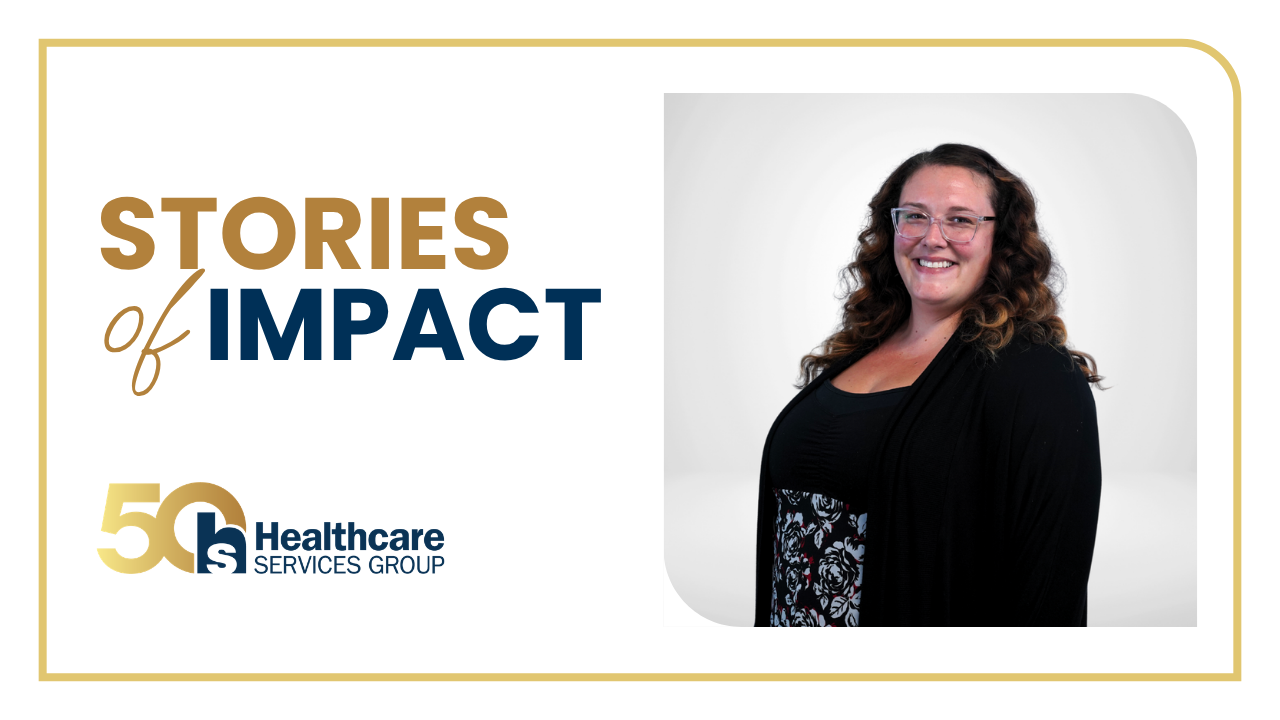
Director of Clinical Operations Jasmin Haycraft
As we continue our Stories of Impact series, Director of Clinical Operations Jasmin Haycraft shares the important role collaboration plays in resident care and how HCSG Registered Dietitians can serve as a valuable conduit between clinical teams and facility leadership.
“Back when I worked as a Registered Dietitian in a long-term care facility, I cared for a resident who was blind, deaf, and eventually became bedbound,” Jasmin shares, “As a natural result of becoming bedbound, he experienced muscle loss and the facility’ s interdisciplinary team began discussing whether a tube feeding intervention would be appropriate.”
Drawing on her background as both a Registered Dietitian and a former nurse in the United States Air Force, Jasmin viewed the situation through a broader clinical and quality-of-life lens. While the resident’s weight loss was clinically expected due to his decline in mobility, she believed the bigger consideration was preserving the small moments of comfort and dignity he still had—including the ability to enjoy meals.
“For this resident, meals were one of the few meaningful experiences he still had each day,” Jasmin explains. “He was legally blind, deaf, and nearing the end of his life, but he was still able to eat safely without a feeding tube.”
Recognizing the importance of shared decision-making, Jasmin worked closely with the facility’s care team to present a more comprehensive clinical perspective. She prepared an in-depth presentation that combined clinical data, nutrition expertise, nursing insight, and quality-of-life considerations to support her recommendation.
“The presentation lasted nearly three hours,” Jasmin says, “I approached it respectfully, but I was passionate about advocating for the resident and ensuring every aspect of his care was considered.”
Following the discussion, the interdisciplinary team reconsidered their initial recommendation.The resident was ultimately able to continue enjoying meals without intervention.
For Jasmin, the experience had a lasting impact beyond the resident’s care plan. “After that situation, the facility team became much more collaborative with our clinical staff and more open to seeking our recommendations and professional input,” Jasmin said. “That’s what interdisciplinary collaboration should look like—bringing different perspectives together to make the best possible decision for the resident.”
Stories like Jasmin’s reflect the role of HCSG Registered Dietitians beyond nutrition support alone and is a reminder that the best outcomes often come from interdisciplinary collaboration grounded in clinical expertise, compassion, and a shared commitment to doing what is right for the resident.